
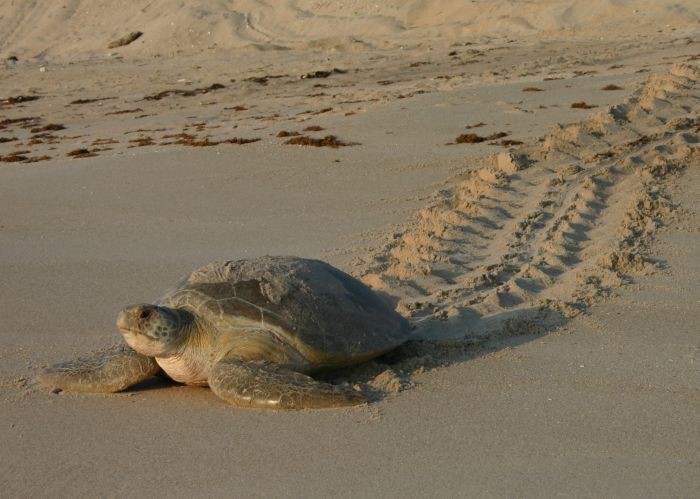
Sea turtle nesting season has begun and the Florida Fish and Wildlife Conservation Commission (FWC) is reminding residents and visitors how they can help protect vulnerable nesting and hatchling sea turtles while enjoying Florida’s coastal areas.
Because our state’s shorelines provide important nesting habitat for several species of threatened and endangered sea turtles, beachgoers can have a significant impact on the success of this year’s nesting season. Sea turtles typically return to nest in March along Florida’s southeast Atlantic coast from Brevard County south to Broward County, while nesting begins on the Gulf Coast and north Florida beaches in April or May.
There are easy steps people can take to help protect nesting sea turtles, including keeping beaches clean and dark, giving them space, and minimizing disturbances.
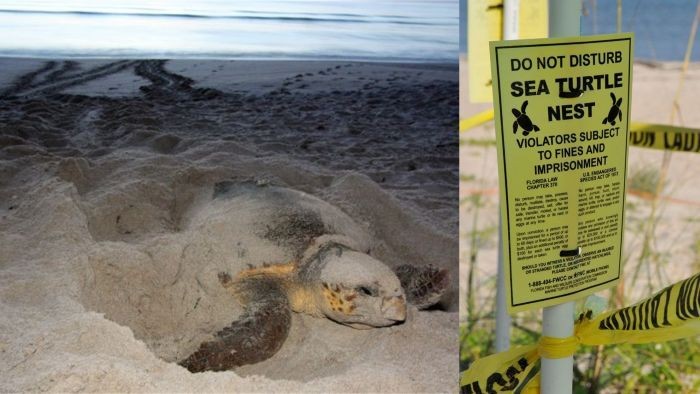
Lights out: Lights on or near the beach can misdirect and disturb nesting sea turtles and their hatchlings, leading them away from the ocean and toward potential danger. To prevent this, only use flashlights or cellphones on the beach at night when necessary. Anyone living along or visiting Florida beaches can do their part by turning off porch, parking or deck lights when not in use and closing curtains after dark to avoid disorienting nesting and hatchling sea turtles. If lighting is still visible from the beach, be sure it is long wavelength, mounted low and shielded.
Admire from afar: While it can be exciting to witness sea turtles on the beach, getting too close (50 feet or less) to nesting sea turtles can cause them to leave the beach before they complete the nesting process. If an animal changes its behavior, you’re likely too close. Remember, it is illegal to harm or disturb nesting sea turtles, their nests or eggs, or to handle hatchlings.
Clear the way at the end of the day: Female sea turtles expend large amounts of energy crawling out of the surf and far enough up the beach to dig and lay nests in spots that are less vulnerable to the tides. Obstacles on the beach can entrap and prevent them from nesting as they crawl across the sand to lay their eggs. Trash, holes in the sand and other obstacles can also prevent sea turtle hatchlings from reaching the water once they emerge from their nest. Food scraps attract predators, such as raccoons and crows, that prey on sea turtle hatchlings. Litter on beaches can entangle sea turtles, birds and other wildlife.
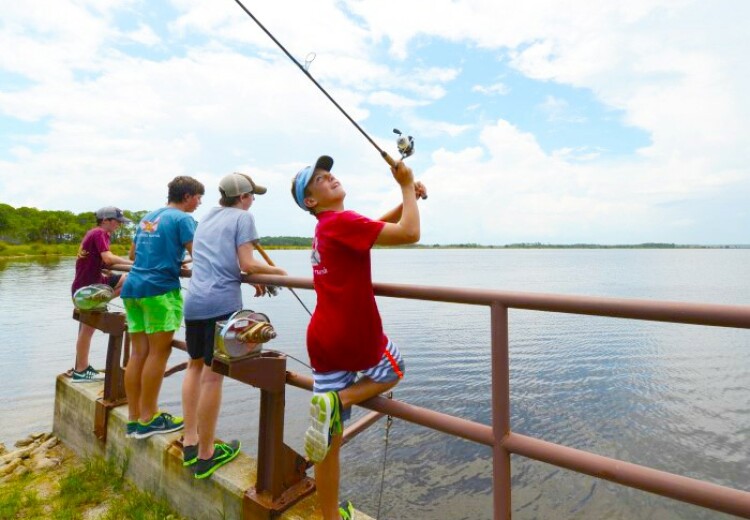
What can you do to help? Properly stash or recycle all trash, fill in human-made holes in the sand, and remove all beach toys, gear and furniture from the sand before sunset. Fishing line can be deadly to sea turtles, waterbirds and other wildlife, so be sure to dispose of it properly. To find a monofilament recycling station near you, visit mrrp.MyFWC.com .
For more information about nesting sea turtles and how you can help, visit MyFWC.com/SeaTurtle or see the FWC’s “Be a Beach Hero” brochure. Other ways to help sea turtles include reporting those that are sick, injured, entangled or dead to the FWC’s Wildlife Alert Hotline at 888-404-FWCC (3922).